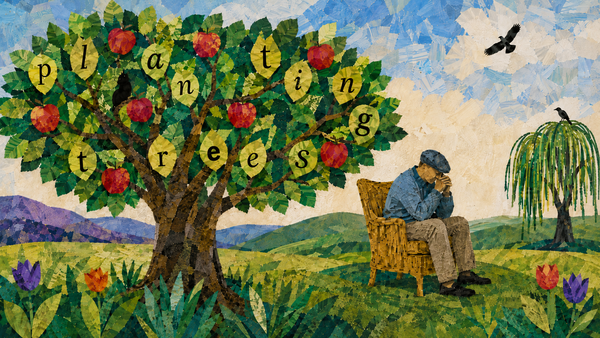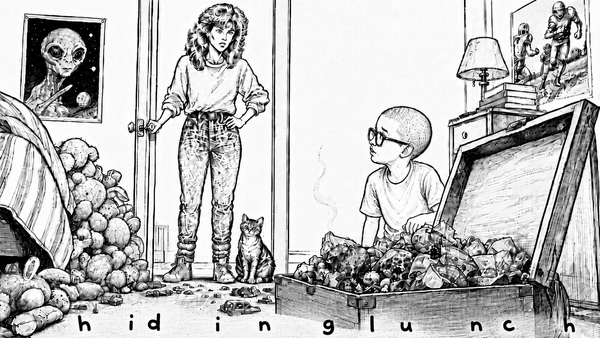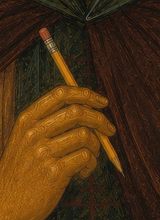

is not "messing around". It's serious business, and its way more grown-up than Werri* thinks.
One regular day during coffee with two others, I made some joke of some sort. It was momentous enough that Werri said, "Y'know, I've never trusted anybody who jokes around all the time. They're immature."
All the time? Huh? I went along with it with an, "Mm." but I really didn't know why he said that. I mean not beyond the fact that he was saying something like,
a) You joke too much, and
b) I don't trust you.
I agree with him that too is bad>, but I had trouble squaring his all the time. I mean, I had heard him laugh many times over the misfortunes and faults of others. In fact, this practically-unavoidable coffee time was generally one where I was playing Twister in conversations that were always about other people. I'm not trying to portray myself as an all-clean good-o. I might just
c) get really anxious talking about people behind their backs**, and
d) be too embarrassed to celebrate the misfortunes and flaws of others, because,
e) maybe part of me always feels like these behaviors will cause me to POW!get it-
f)- that it would mean I have self-interested motivations more than I have an all-clean goodness.
But I do know what he was talking about. I don't really trust people very much either when they can’t ever be serious — when their not-serious-enough comes as they-can't-seriously-examine-their-own-selves. Taking a "hard look" isn't my favorite way to describe it since it's a little too figurative, in my judgement. There are many modes of thought between "I'm always right" and "I'm an ego-maniac with an inferiority complex," and a "hard look" leaves a lot of freedom for self-condemnation to masquerade as good self-inspection. I have a hard time trusting people who seem to be unable or unwilling to examine their own defects. That examination is something that I understand to be a emblem of human maturity. It's opposite is not humor; it's opposite is pride. Werri didn't introduce this comparison, I know.
I lost my way. Little of that resembled my initial internal response to Werri. What really happened inside of me was like this:
g) I wonder why he think jokes are immature.?.., and
h)umor is an important part of living!
Humor is part of how we have fun, for sure, but it is way more than that. Sometimes it’s how we deliver bitter medicine; sometimes it’s a salve for former ne’er-do-wells working on getting healed and not just being a glum lot; sometimes humor is more focused than for some generic “getting (of) attention”; sometimes you want or need to get the attention of people you are responsible for communicating with and humor can work quite well –
a bright ✧clink✧ of a dense river rock against a dull one, or
a fox^ in your periphery, pulling you away from loading the dishwasher again.
⟦Of course, sometimes your mouth wants to smile and your stomach wants to laugh when you hear something terrible. I don’t mean in the vicious, competitive, self-hating+ sense, but like a sneeze. Or a flinch! Yes, sometimes our laugh is a flinch in response to news that we don’t know how to take because it’s so awful. I haven’t had that experience for a long time, but when I was a teenager and it first happened to me, I felt so guilty and ashamed of myself. And of course, no doubt, humor can be a drug that people take in order to avoid feeling bad about themselves. The flinch is not about humor beyond our physiology using a hammer on a screw; the drug humor is to supplant self-examination. Humor can also be used as a distraction from the real work at hand, sure, and that distraction might be a distant cousin to the flinch. But no part of this [paragraph] is meant to argue that the can of objectionable humor is an is. Like pretty much everything else in life, humor has good and bad kinds (and amounts). You could be sanguine, or you could be phlegmatic.⟧
Humor is an important part of play, and pÞl|a∂yγ, too, is an emblem of human maturity.
Þ|∂γ is not messing around.
Þ|∂γ is not "messing around".
Þ|∂γ is not messing around; it is practice. Even animals Þ|∂γ around. I wondered as a kid coming into the understanding that animal thought was really animal (thought), as far as I thought of thinking, that my dog cannot miss me at all like I miss my mom. But, still, they Þ|∂γ, don't they? Why do they? It has been suggested that they are (thinking) through their genes into their fuller, future state as hunters, gatherers, and parents. (So much like us in that.)
What a joy Þ|∂γing pretend was as a kid. Us boys in the neighborhood most often Þ|∂γed "army". The (what we felt was an) unclaimed field behind my house was ours, me and George, me and Jude, me and a little bit of Pete. Sticks and stones, flaming walnuts.~ George did become a soldier. Jude went to prison. Pete taught some church. I ended up in this moment, thinking of what we were preparing for then. Fighting bad guys,
making forts,
showing up, and sometimes
daring ourselves to have the guts to sneak through the dilapidated wooden fence at the back of the lot into Sumbdy's yard and have a real mission. "Army" filled up our days with lessons, and it also brought us fun. But,
Þ|∂γ is not messing around; it is diversion, too. Þ|∂γ – as good and true and worthy Þ|∂γ – is not a prick that leads to your raft being overcome by water. Þ|∂γ is not 365 subs of $1 a piece each day that drain your life by dawn. Þ|∂γ is sleeping on it, catching your breath, a halftime pep talk from Randy. It's a holiday, a constitutional at 1:00, a siesta after algebra 2. It's a reset. It is Abba Anthony teaching the hunter the truest reason to not overdraw his bow.
Do not leave your soul on red.
Þ|∂γ is listening to it. You might riff or noodle or jam. You might Þ|∂γ and let your conference of birds enter the gateless gate. Athletes Þ|∂γ sports when they are not performing them. Musicians do, too, because Þ|∂γ is some form of musical making.
There are so many things that I want to say about Þ|∂γ but those will have to be for future blog post(s). For now, look how Þ|∂γ stands in the doorway between worlds.
When the boys and I Þ|∂γed "army" our place was not between civilian and enlisted lives; we dug, collected, snapped, swore, and chucked between childhood and adulthood. Our Þ|∂γ was fun and passed the time and gave us practice in some social skills. It also gave body to our imaginations, where everything humans ever devise begins – cartoon characters and methods of torture, a 366th white paint color and another method of in-utero surgery, special paths for tax exemption and catchy words for something timeless. We were out in the field listening.
One time, we were in the woods. Me and George and his older brother, Johnny. Our Þ|∂γ was throwing rocks at each other. It was me and George against him. It was fun and exhilarating, hearing the shooshing leaf crowd exhaling suddenly as our projectiles missed and hit the forest floor, rolling hard and coming quickly to a stop. We would hear the ✧knock✧ against tall oaks looking down, their heads above us collecting sunshine, their sturdy bodies taking blows, protecting us from all except our own wayward steps.
George stepped out too soon and, !POW!, he got it good in the back of the head. He said, MMM! Oww! until he took his hand off of the back of his head and looked at it. It was covered in blood and he screamed, "I'm bleeding!", looking violated and shocked. I was furious and ready to defend my friend by telling on Johnny, but not before marshalling the worst words I knew to hurl back at his damn reckless idiot stupid jerk face.
I ran to George and Johnny's house, leapt up the stairs, and breathlessly told their mother what had happened. I told it all, leaving no parts out, certain that she would be at least as angry and horrified as we were. She "asked", YoU wErE tHrOwInG rOcKs At EaCh OtHeR?!?!?! It wasn't until then that I saw what a bad idea throwing rocks at each other was, and I don't know what subtle progression turned our Army on itself.
Of all the made up games and activities, that was definitely the worst (until about 7th grade). It was wayward Þ|∂γ that turned serious. George was okay, but had ringing ears and a headache for I don't know how long. And honestly, couldn't that have gone tragically worse? Þ|∂γ does not require that we come dangerously close to serious injury, but I think that it might always happen in a space that contains risks of some kind.
Some animals laugh when they Þ|∂γ, chuckling titters and gekkering hoots. Breathy panting, smiling grimaces, showing teeth and ready postures. Softer, more awkward endearments that come close, but, importantly, not too close, to possible, serious moments. Laughs afford a chance to practice hunting, gathering, and parenting actions and hopefully not making anyone else angry. We do not want to break the bonds between us. Our testing, mimicking movements are not half-actions; they are real in their own right. They are close but different enough, but how they are different can be hard to know while we are dedicated to the moment.
They, too, are part of Þ|∂γ – Þ|∂γ that has some risks, because many fights begin with Þ|∂γ that becomes, without warning, and after silently crossing some threshold, just messing around. And messing around is Þ|∂γ that has lost its purpose.
Some animals seem to laugh when they Þ|∂γ, especially apes with their raspy ha-has and rats with their ultrasonic ch!rp. They are making sure that, while they get some practice in during downtime, nobody will think they're seriously going at it. Those animal laughs make us laugh, don't they? Maybe it's because we affectionately notice, "Aw - they sound kind of like us." They sure do. Goofy! And endearing.
I think it's the same with us people. You know a good laugh – a real laugh – because, if you isolate it in your mind in comparison to the person speaking, it sounds goofy, and hopefully endearing. And if it doesn't do either for you, Werri, well,
i) don't trust you.
j)
k)
*A pretend name!
**Yes, including right now.